 eng
 rus
 deu
 spa
 fra
 ita
 por
 srp
 tur
 ukr
 por
 bos
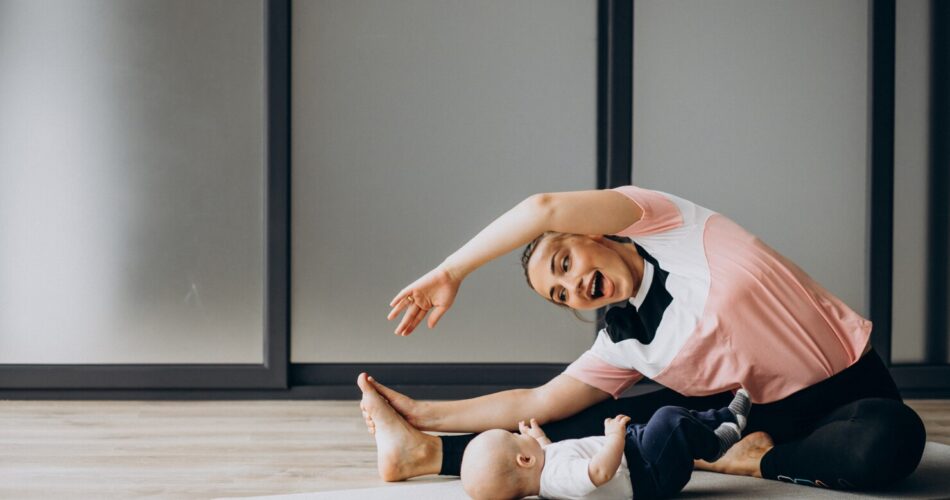
You can share the time without making your baby part of the load. For exercises that need both hands or challenge your balance, put your baby safely down first. A clear space on the floor beside you, with your baby awake and supervised, lets you stop when either of you needs a break.
Start with a familiar movement
Try standing up from a sturdy chair with both feet on the floor. Keep the baby clear of your feet, breathe out as you stand and sit down steadily. A short walk with the pram is another way to move together. Adjust the distance to how you feel. In the first weeks of exercise, a small amount may be plenty.


- Yoga and Pilates after vaginal/cesarean birth
- Cardio and toning
- Morning and evening workouts
- 10–30 minutes a day
- Nutrition and macronutrient program
- Consultations with experts
- Psychological support
- Meditation, SPA and podcasts
Leave out bouncing, overhead lifts and balance drills while holding your baby. Their head and neck need appropriate support and you need your hands free if you lose your footing. In a parent and baby class, ask where babies rest and what the teacher suggests if a baby needs feeding.
Let symptoms guide the next step
If moving brings on wound pain, vaginal heaviness or urine leakage, reduce the load and ask a midwife or pelvic health physiotherapist for advice. After a complicated delivery, check your individual instructions before adding resistance. Your recovery after birth matters more than finishing a video.
Sources
- NHS, United Kingdom. Keeping fit and healthy with a baby
- NHS, United Kingdom. Your body after the birth


Download the app and get 7 days free use


