 eng
eng rus
rus deu
deu spa
spa fra
fra ita
ita por
por srp
srp tur
tur ukr
ukr por
por bos
bos
- What is actually separating
- Who is more likely to have a wider gap
- How to tell if you have it
- Two fingers, 2 cm or 2.5 cm
- What exercise changes
- Which kind of exercise
- Starting a programme safely
- Following a home programme
- Why a binder is not the answer
- What about stimulation machines
- How your core copes
- Back, bladder and pelvic floor
- When to call, and when surgery comes up
- If the gap does not close
- Sources
- Read next
Abdominal separation, or diastasis recti, is a widening of the seam between the two long muscles down the front of your belly, and it is one of the most ordinary things pregnancy does to a body. United States (US) health guidance says no treatment is needed for diastasis recti during pregnancy, and that it may improve after delivery.
After birth, a structured exercise programme does more for the gap than anything you wear. How your core works matters more than the gap’s width.

What is actually separating
Diastasis recti is a noticeable separation between the left and right ‘six-pack’ muscles (rectus abdominis). A narrow, thickened band of connective tissue called the linea alba normally holds them together down the midline. As it thins and widens, they move apart.
Hormonal changes in pregnancy relax the connective tissue of the abdominal wall while the growing womb presses on it for months, stretching and thinning the muscles. Higher body weight and diabetes have also been linked to diastasis. The risk is greater with twins or more, or with many pregnancies, because the muscles have been stretched repeatedly.
The gap keeps widening as pregnancy progresses: in one ultrasound study it was markedly wider at 37 weeks than at 12. It narrowed after delivery. By 6 weeks after birth, it was still wider than at 12 weeks, and the muscles had only partly regained the thickness and stiffness lost late in pregnancy.
Roughly 30-60% of women have diastasis after birth, depending on how and where the gap is measured. In many, it persists beyond six months.
Who is more likely to have a wider gap
In one hospital’s records of women seen 6 weeks to 6 months after birth, four factors were each linked to a severe gap of 4 cm or more. They were a baby weighing at least 3,350 g (about 7 lb 6 oz), gaining at least 12.25 kg (about 27 lb) in pregnancy, a caesarean birth (C-section), and having given birth before.
Only 34 women had a big baby, a caesarean and a previous birth together. About 6 in 10 of them had a severe gap, with roughly 7 times the odds of women who had none of the three.
The cut-offs came from that one hospital’s group of women, and none of these factors is something you can change now. Treat them as a reason to have your belly checked after birth, not as a forecast.

How to tell if you have it
During pregnancy, the separation can be easy to miss. Early on, extra skin and soft tissue at the front of the abdominal wall may be the only sign. Later, the top of the womb may visibly bulge through the gap.
The typical ridge runs down the middle of the belly from the bottom of the breastbone to the belly button and becomes more pronounced with muscle straining.
A health care provider can diagnose diastasis with a physical exam, a clinician’s check rather than a validated home test. With you lying down, the edges of the right and left muscles are usually easy to feel. Sitting up or coughing can make the midline bulge outward between them.
Two fingers, 2 cm or 2.5 cm
There’s no single agreed cut-off. Exercise trials have defined diastasis as a gap wider than two finger-widths, 2.5 cm or 2 cm, and some set no number at all.
One recent review grades the gap measured after birth as normal up to 2 cm, mild at 2-3 cm, moderate at 3-5 cm and severe at more than 5 cm. Ask which scale they’re using. Pay more attention to how the gap changes over the months than to which side of a line it starts on.
What exercise changes
In trials of women within a year of giving birth, about 6-8 weeks of structured exercise left the gap roughly 8 mm narrower on average than no treatment or standard care, though results varied widely. The smallest change considered clinically meaningful is roughly 5-10 mm.
First-time mothers and women who had given birth before saw about the same narrowing with exercise, roughly 8.5 mm. Programmes begun within three months of birth reduced the gap by about 10 mm, an estimate based on weak evidence, compared with about 6 mm for those begun after six months. The apparent advantage of an early start was too small to rule out chance. Starting later still helped.
Which kind of exercise
Pooled results from nine trials showed no clear advantage for any specific type of training, but structured exercise consistently beat doing nothing or standard care.
A larger analysis compared many programmes, often indirectly and with some low-certainty evidence. Comprehensive routines that trained both the deep and the surface abdominal muscles reduced the gap more than single-muscle work or no exercise, especially when combined with electrical muscle stimulation and breathing techniques. The best combinations finished about 23-26 mm ahead of no treatment.


- Pelvic floor
- Flat stomach
- Healthy back
- Posture and tone
- Yoga and Pilates
- Personalized menu
- Macronutrients and eating habits
- Meditations and podcasts
Choose a routine that works the deep core and the outer muscles together, and stick with it rather than searching for one perfect move.
Starting a programme safely
ACOG, the American College of Obstetricians and Gynecologists, encourages women with uncomplicated pregnancies to do aerobic and strength-conditioning exercise before, during and after pregnancy, once a thorough clinical check has ruled out a medical reason to avoid it. Anyone who had complications needs an individual assessment.
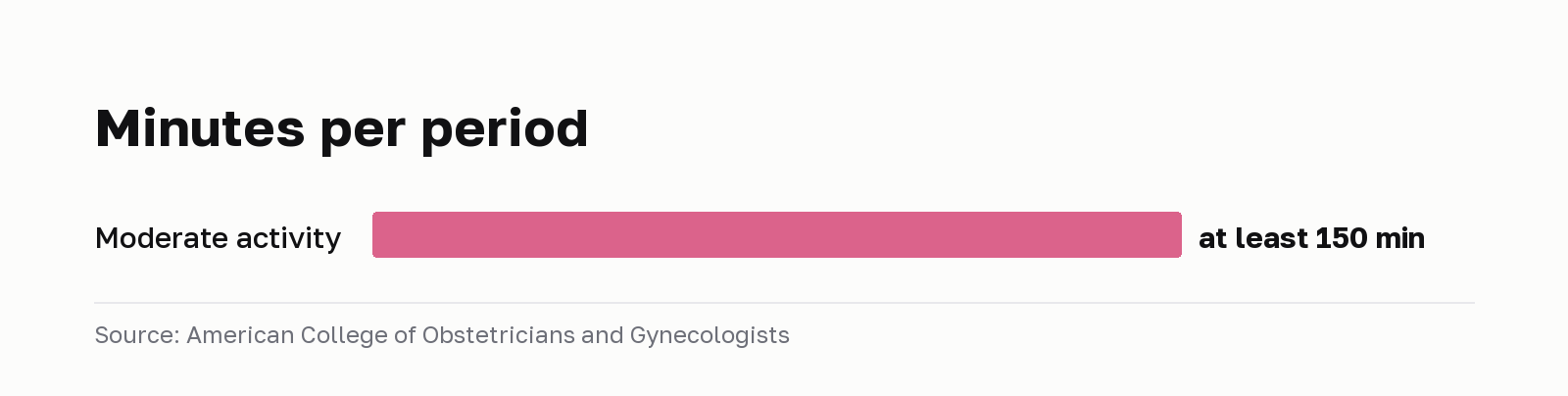
For general fitness, separate from treating the gap, US activity guidelines reinforced by ACOG recommend at least 150 minutes of moderate-intensity aerobic activity spread across each week, during pregnancy and after birth.
Following a home programme
One trial followed first-time mothers after a caesarean. An app-guided and a traditional home programme each took 30 minutes three times a week for 8 weeks, with a weekly clinic check-in. Both reduced the separation and improved abdominal strength and waist size.
The app version narrowed the gap slightly more above the belly button (from about 1.3 cm to 0.9 cm, against 1.1 cm with the traditional one) and made no difference below it, so either route can work for you.
Some high-intensity or poorly chosen routines might cause the separation or make it worse, a warning drawn mostly from research in men that names no specific exercises. The app trial’s authors concluded that app-based programmes need focused supervision from a health care provider so that the exercises are done correctly and safely.
If you want something to follow at home, MomsLab’s ZeroCore programme starts with breathing, the deep muscles and the pelvic floor, leaves load on the abdomen for later with no crunches at the start, and runs separate tracks after a vaginal birth and a C-section, from 20 minutes a day.
Why a binder is not the answer
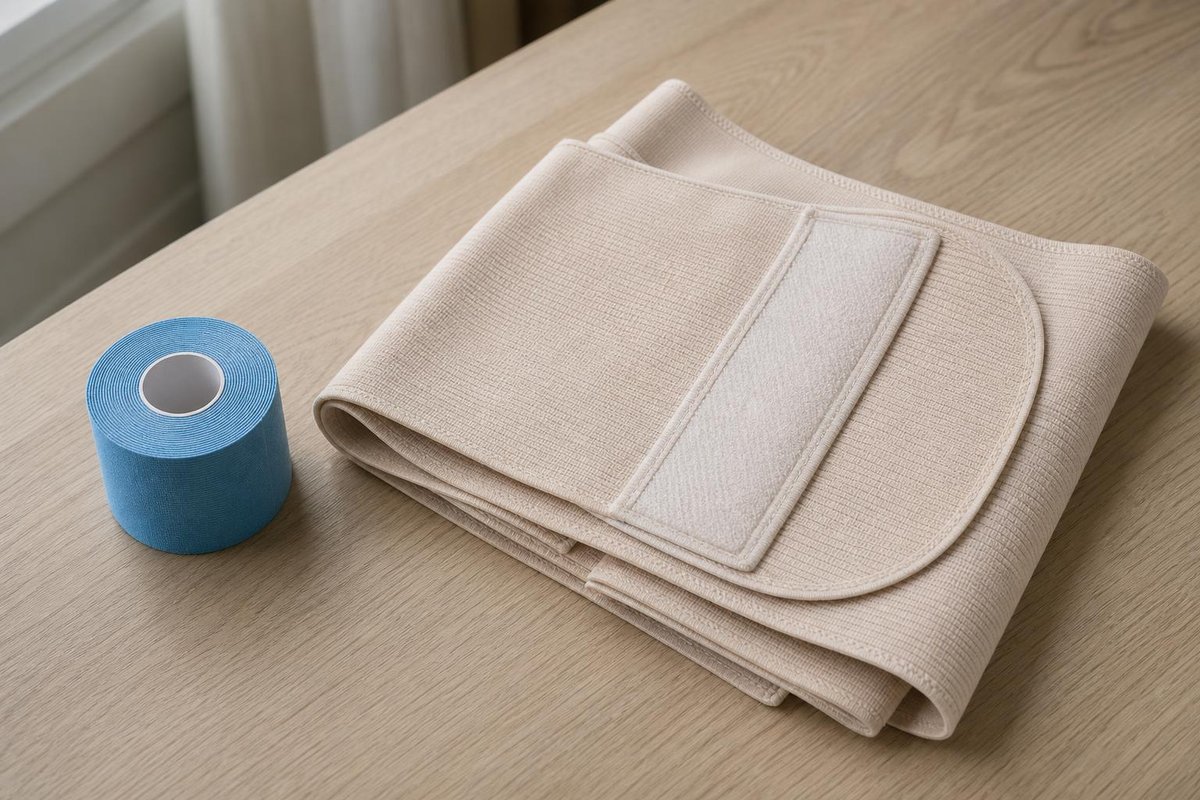
Binders and tape hold the abdomen from outside. Estimates from a network of trials often compared indirectly put the gap reduction in women after birth at only about 4 mm with kinesiology tape, about 10 mm with abdominal binders and more than 20 mm with the most effective exercise-based programmes, all compared with no treatment. Tape falls below the 5-10 mm threshold. A binder achieves about half the change seen with the best programmes.
What about stimulation machines
In a small group given six sessions of abdominal magnetic stimulation, with no comparison group, the gap went from about 20 mm to about 15 mm when measured the day after the last session. The thicker muscles may partly have reflected temporary swelling rather than real growth. Machines are not a shortcut.
How your core copes
A narrower gap did not, on its own, make everyday life feel any easier. In two small, short trials, women who exercised scored no better on a standard questionnaire about disability in daily activities than women who did not, even though their gap had narrowed; in at least one, the women had little disability to begin with.
Some single trials did report better quality of life with exercise. Start with whether anything bulges at the navel, leaks or hurts, then how the core copes with an ordinary day. The number in millimetres comes last.
Back, bladder and pelvic floor
Diastasis may be associated with weaker core muscles, which can in turn lead to problems such as low back pain. A study of women examined after six weeks postpartum found a link, not proof of cause: those with a separation had about 1.7 times the odds of stress urinary incontinence, meaning leaks when you cough or strain, and weaker pelvic-floor contraction. Bring up leaks or back pain at your postnatal check. The gap’s width doesn’t change that.
When to call, and when surgery comes up
US health guidance says surgery is not usually performed for diastasis recti and exercise may help improve it. In general, complications arise only if a hernia develops, which can happen at the belly button or just above it, where the connective tissue is widened and thinned.
The midline ridge that appears with strain is the condition itself, not a complication, so it can go on the list for a routine check. A new bulge is different. If it appears at or just above the belly button, contact your midwife or doctor promptly rather than waiting for the next appointment, and tell them if it hurts.
If the gap does not close
Conservative care, especially core stabilisation exercise, improves function in mild diastasis. There is no consensus on when treatment is needed or how well it works in the long term, but severe cases may need surgical repair.
One trial report, citing earlier work rather than a guideline, names physiotherapy as the main treatment. It considers surgery only for women with functional problems who have already completed six months of standardised deep core exercise.
Abdominal separation is something pregnancy does, not something you failed to prevent, and during pregnancy there is nothing to fix. After birth, the evidence points one way: a structured programme that trains the deep and outer core together narrows the gap more than a binder, tape or a machine. Give it weeks, not days, and remember that starting later still helps. While you work at it, judge progress by how your core copes: whether anything bulges at the navel, leaks or hurts, and how an ordinary day feels. The millimetres come last. If leaks or back pain persist, raise them at your postnatal check, and if a new bulge appears at or just above the belly button, contact your midwife or doctor promptly.
Sources
- American College of Obstetricians and Gynecologists. value is what Coveo indexes and uses as the title in Search Results.–> <title>Physical Activity and Exercise During Pregnancy and the Postpartum Period : ACOG
- BMC pregnancy and childbirth. Identification of risk factors for postpartum pelvic floor dysfunction in a Chinese population: a retrospective study
- BMC surgery. Precision medicine exploration of postpartum rectus abdominis muscle separation: from basic research to clinical practice
- Healthcare (Basel, Switzerland). Effect of a Mobile App-Based Exercise Program on Diastasis Recti Abdominis, Muscle Strength, Anthropometric Measures, and Satisfaction Among Post-Cesarean Primiparous Mothers: A Randomized Controlled Trial
- Hernia : the journal of hernias and abdominal wall surgery. Diastasis recti abdominis: A comprehensive review
- Hernia : the journal of hernias and abdominal wall surgery. Non operative management of postpartum Diastasis Recti: a systematic review and metanalysis of randomized controlled trials
- MedlinePlus (National Library of Medicine, National Institutes of Health). Diastasis recti: MedlinePlus Medical Encyclopedia
- Quantitative imaging in medicine and surgery. A multitask deep learning framework for the automated quantification of abdominal tissue morphology on ultrasound and the therapeutic monitoring of diastasis recti abdominis
- Scientific reports. An evidence-based comparison of rehabilitation strategies for diastasis recti abdominis in postpartum women: a systematic review and network meta-analysis
- Zhong nan da xue xue bao. Yi xue ban = Journal of Central South University. Medical sciences. Risk factors and interaction analysis of severe diastasis recti abdominis within 6 months postpartum


Download the app and get 7 days free use


