 eng
 rus
 deu
 spa
 fra
 ita
 por
 srp
 tur
 ukr
 por
 bos

- Ovulation pain: the symptom everyone expects
- Spotting around ovulation
- Temperature: proof after the fact
- Cervical mucus: the sign that comes first
- Checking it yourself
- Why mucus is the sign to trust
- When ovulation happens in your cycle
- Day 14 is an average, not a date
- Which range to use
- How long the fertile window lasts
- If you notice no signs at all
- Kits, apps and irregular cycles
- Signs that mean calling someone now
- When pregnancy is possible
- Learning your own rhythm
- Sources
- Read next
The common symptoms of ovulation are a change in cervical mucus to something clear, slippery and stretchy, a small rise in your resting temperature, and, for some women, a one-sided ache low in the tummy. Mucus is the one worth learning to read, because it changes in the days before you ovulate, while temperature only rises afterwards and pain shows up for fewer than half of women. Most people wait for the twinge. The better signal is quieter, and it arrives first.

Ovulation pain: the symptom everyone expects
Roughly 4 in 10 women feel pain at ovulation (about 40%), which leaves plenty who never notice a thing. When it does happen, the cause is the ovary releasing an egg. It often feels like a dull ache or sharp, sudden twinges, usually on one side of the tummy at a time, and it may switch sides from cycle to cycle depending on which ovary is doing the work that month.
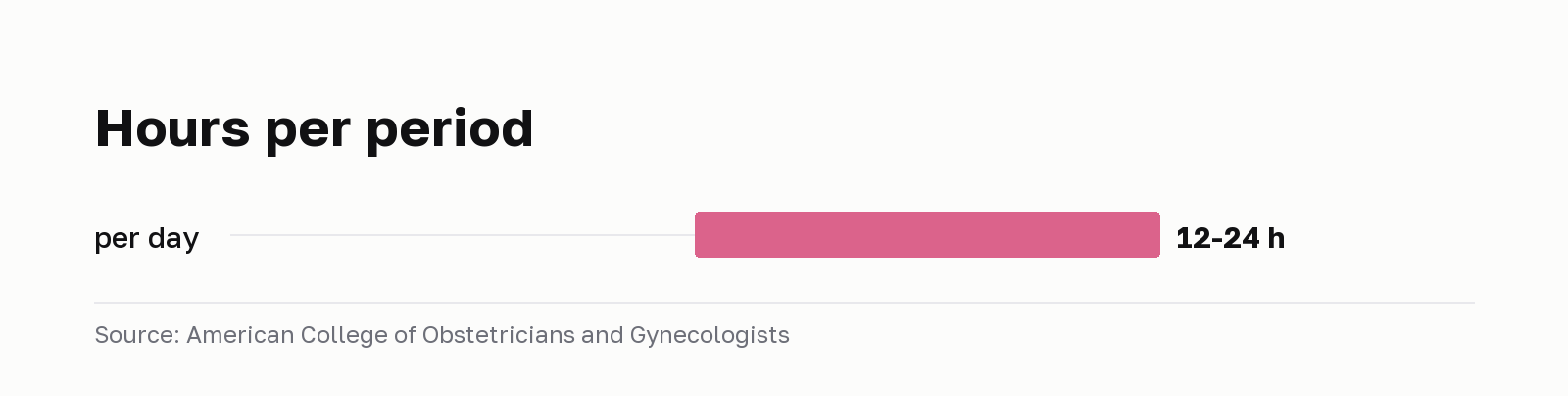
Typical ovulation pain commonly arrives about 14 days before your period, usually lasts a short time and is nothing to worry about. For typical pain, that means anything from a few minutes to a day or two. Pain that is severe, persistent or keeps coming back is a different matter and needs medical advice.
Spotting around ovulation
Some women notice a little vaginal bleeding around the time they ovulate. That doesn’t make every mid-cycle bleed an ovulation symptom: bleeding between periods or after sex needs to be checked by a doctor.
Temperature: proof after the fact
Your resting temperature rises after you ovulate, not before, and stays higher for the rest of the cycle before falling again at the end. That makes it a record of what has already happened rather than a warning of what’s coming. The shift is small: about 0.2 of a degree or more above the previous six days, with the gap between the two halves of the cycle most often under 1 degree.
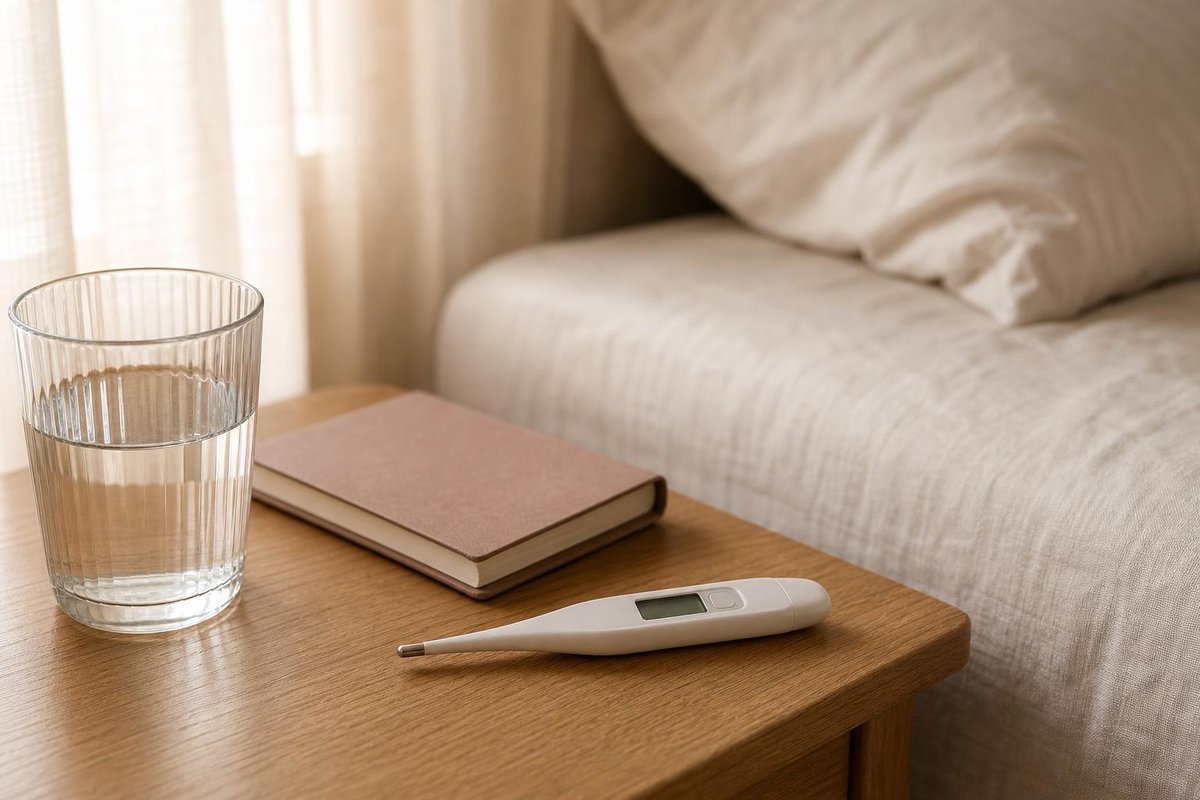
To catch something that small, take your temperature each morning before you get out of bed, ideally at the same time, using a basal thermometer or a digital one accurate to a tenth of a degree, held in your mouth for 5 minutes or until it signals, and stay still, because moving can push the reading up slightly. A pattern shows up over several cycles of charting, not from one morning’s number.
Cervical mucus: the sign that comes first
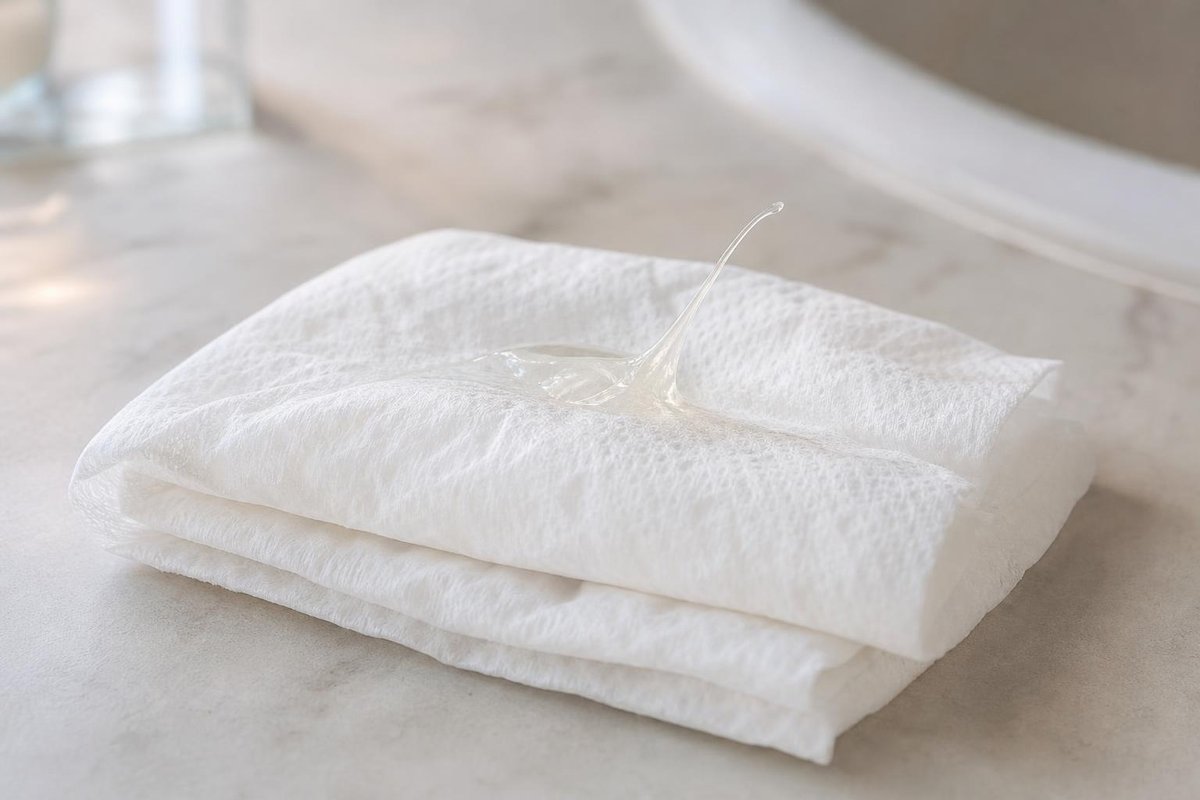
Cervical fluid protects sperm and helps it move toward the womb and fallopian tubes, and it changes as your body gets ready to release an egg. Across a typical cycle it follows a pattern: none during your period, a dry feeling just after, then sticky or rubbery, then wet, creamy and white, which is a fertile sign, and finally slippery, clear and stretchy like egg white, which is the most fertile sign. That change peaks 1 to 2 days before ovulation, when the discharge may feel thin and elastic. Once ovulation has passed, the vagina usually turns dry again, and any mucus left may thicken into something more like bubble gum.
Checking it yourself
Take a little fluid from the lower end of your vagina, tap your thumb and first finger together, then spread them apart. If it stretches between them, ovulation could be near, though a stretch is a hint rather than confirmation.
Why mucus is the sign to trust
Of all the ways you can spot ovulation yourself, watching your cervical mucus tends to be the most reliable. That surprises people, because pain feels more definite and a temperature chart looks more scientific. The reason is timing: pain turns up for only some women and temperature moves after the event, while mucus changes in the run-up, when there is still time to act on it.
There is no way to pinpoint exactly when ovulation happens from body signs or a calendar, so the most reliable home sign is still an estimate. With fairly regular cycles, knowing your cycle’s pattern together with how your mucus changes can give you a pretty good sense of when to have sex, even though no method is foolproof.
When ovulation happens in your cycle
US patient guidance puts ovulation about 14 days before your period starts, a gap that stays fairly consistent whatever your cycle length: around day 7 in a regular 21-day cycle, around day 21 in a regular 35-day one. Counting back from your next period therefore works better than counting forward from the last.


- Pelvic floor
- Flat stomach
- Healthy back
- Posture and tone
- Yoga and Pilates
- Personalized menu
- Macronutrients and eating habits
- Meditations and podcasts
Day 14 is an average, not a date
Across women with an average 28-day cycle, ovulation generally falls somewhere between day 9 and day 20. That is a spread of nearly two weeks inside the cycle every textbook treats as standard, so a single date circled on the calendar is a guess. What the range does rule out is the very start: ovulation is unlikely in the first 7 days.
Which range to use
The UK’s National Health Service (NHS) gives ranges rather than a day. In most women ovulation falls around 10 to 16 days before the next period, which puts the fertile days around day 14 only in a regular 28-day cycle. Its fertile time sits around ovulation, roughly 12 to 16 days ahead of your next period. Take the widest of these, 10 to 16 days back from when you expect to bleed, as the stretch to watch, and let your mucus tell you where in it you are.
How long the fertile window lasts
For timing sex to conceive, not for avoiding pregnancy, the fertile window is about 6 days each cycle: sperm can live in the body for as long as 5 days and an egg survives about 12 to 24 hours after ovulation, so sex from up to 5 days before ovulation to 1 day after can lead to pregnancy. The NHS gives up to 7 days as the upper limit for sperm survival, which stretches the fertile time further into the days before ovulation.
The two figures differ at the outer edge but point to the same advice: the days before ovulation count for more than the day after, so act when your mucus turns clear and stretchy rather than waiting for a twinge or a temperature rise. If you’d rather not hold all of this in your head, the MomsLab cycle calendar builds a fertile-window forecast from what you log, and it gets sharper the longer you keep it.
If you notice no signs at all
Some hormonal contraceptives, including the combined pill, the patch and the injection, work by stopping ovulation, so you wouldn’t expect these signs while you use them as intended.
Highly irregular periods may be a sign that you aren’t ovulating, which is for a doctor to assess, and medication may be needed to help you ovulate. Worldwide, polycystic ovary syndrome (PCOS) is the most common cause of women not ovulating.
Kits, apps and irregular cycles
Ovulation predictor kits test your urine for luteinising hormone (LH), are sold without a prescription in US drugstores, and can help you tell when you’re ovulating if your cycle is irregular. One US fertility specialist is more cautious: apps, trackers and predictor kits don’t work for everybody and their results aren’t always accurate, and with highly irregular periods, predicting ovulation at home isn’t worth the time or money, so see a gynaecologist or fertility specialist instead. Put together, that gives a rule: a cycle that is a little unpredictable is what a kit can help with, while one that is highly irregular is a question for a doctor, because the first thing to find out is whether you ovulate at all.
Signs that mean calling someone now
In the UK, the NHS advises asking for an urgent appointment with a general practitioner (GP) or calling NHS 111 if tummy pain is severe and painkillers haven’t helped, if it keeps coming back, or if you think you may be pregnant. Outside the UK, those same signs mean getting prompt medical advice rather than waiting for a routine visit.
See a doctor if ovulation pain is severe, lasts longer than 3 days, or comes with heavy bleeding or vaginal discharge, because it could point to another condition such as endometriosis, appendicitis or pelvic inflammatory disease. Pain that feels like ovulation pain can also come from ovarian cysts, some sexually transmitted infections such as chlamydia, scar tissue from surgery near the ovaries such as a caesarean section, endometriosis and ectopic pregnancy.
When pregnancy is possible
If you might be pregnant, pain low in your tummy on one side together with a missed period, vaginal bleeding or a brown watery discharge, pain in the tip of your shoulder, or discomfort when you pee or poo can be signs of an ectopic pregnancy, and they mean getting medical advice right away, even if you haven’t had a positive pregnancy test. These signs tend to appear between the 4th and 12th week of pregnancy and can have other causes, which is for a clinician to sort out, not you.
Learning your own rhythm
The three signals keep different time. A twinge, if you get one, is a brief notice. A temperature rise is a receipt for something already done. Mucus is the one that reads ahead, and a few cycles of noticing it will tell you more about your own pattern than any date circled on a calendar.
Sources
- American College of Obstetricians and Gynecologists. Trying to Get Pregnant? Here’s When to Have Sex. ACOG
- Better Health Channel (Department of Health, State Government of Victoria). Ovulation pain: Better Health Channel
- Centers for Disease Control and Prevention. How To Be Reasonably Certain that a Patient Is Not Pregnant: Contraception: CDC
- MedlinePlus (National Library of Medicine, National Institutes of Health). Pregnancy: identifying fertile days: MedlinePlus Medical Encyclopedia
- National Health Service (United Kingdom). Ectopic pregnancy: NHS
- National Health Service (United Kingdom). Ovulation pain: NHS
- National Health Service (United Kingdom). Period problems: NHS
- National Health Service (United Kingdom). Periods and fertility in the menstrual cycle: NHS
- National Health Service (United Kingdom). Periods: NHS
- World Health Organization. Polycystic ovary syndrome


Download the app and get 7 days free use


