 eng
 rus
 deu
 spa
 fra
 ita
 por
 srp
 tur
 ukr
 por
 bos

- Why so little shows up this early
- Early pregnancy symptoms
- Nausea and appetite
- Why symptoms can’t confirm pregnancy
- A little bleeding does not rule it out
- When a test can confirm it
- Trust a positive more than a negative
- Signs that mean getting help now
- Pain, with or without a positive test
- Bleeding once you know you are pregnant
- Sources
- Read next
Before a missed period, no single sign can tell you that you are pregnant, because tender breasts and tiredness show up before an ordinary period too. Missing a period is often the first sign of possible pregnancy, if you were expecting one. Until that date your body is mostly saying what it says before any period, so the useful question is not what you feel but when a test can give you an answer you can trust.

Why so little shows up this early
Ovulation happens about 12-16 days before the start of the next period, and because sperm can survive inside the body for up to 7 days before ovulation, the fertile time starts earlier in the cycle. Every pregnancy test detects the hormone human chorionic gonadotrophin (hCG), which the body only starts producing around 6 days after fertilisation. There’s little time for symptoms to develop.
If you are trying to conceive, the MomsLab cycle calendar forecasts your period and fertile window from what you log, which gives you a date to test from rather than a feeling to interpret.

Early pregnancy symptoms
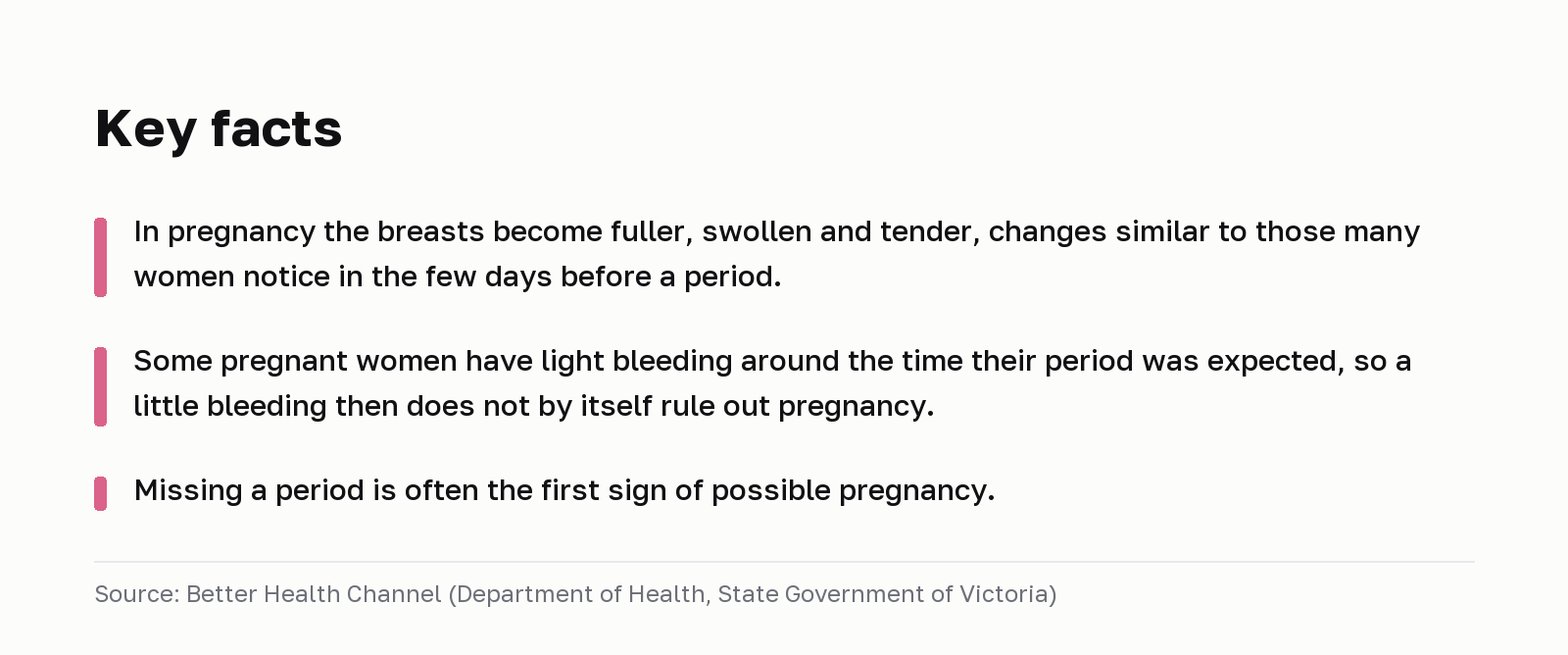
There is no fixed start date. Pregnancy makes the breasts fuller, swollen and tender, changes similar to those many women notice in the few days before a period. Most women start passing urine more often within the first few weeks of pregnancy because there is more fluid in the body, the kidneys work more efficiently and the growing womb presses on the bladder. Overwhelming tiredness is common in early pregnancy, most likely because of the large rise in progesterone, a hormone that also slows metabolism, but energy usually returns by around the fourth month, once the placenta is well established.
Nausea and appetite
Morning sickness usually begins around the fourth to sixth week of pregnancy and may settle by week 12, though it can carry on longer or come back at around 32 weeks. It affects more than half of all pregnant women, bringing nausea, vomiting and loss of appetite, and despite the name it often lasts throughout the day.

Food cravings are very common, especially for foods that provide energy and calcium such as milk and dairy, and old favourites can suddenly become unappealing, but craving non-food items such as soil or paper (pica) may point to a nutrient deficiency and is worth raising with a general practitioner (GP) or midwife.
Why symptoms can’t confirm pregnancy
Premenstrual syndrome (PMS) doesn’t affect every woman who has periods, but its common symptoms include bloating, breast tenderness, mood swings, irritability, spotty skin, low sex drive and headaches, which usually improve when the period starts and disappear a few days afterwards. These symptoms tend to begin, and can intensify, in the 2 weeks before a period, with tiredness and feeling depressed among them. Sore, swollen breasts and fatigue fit both.
Some women get many symptoms of pregnancy while others have only a few, so comparing your month with a friend’s tells you very little. Pregnancy signs, including a missed period, nausea and tiredness, can also come from stress or illness and don’t necessarily mean you’re pregnant, so take a home pregnancy test or see a doctor if you think you might be.
Even a late period isn’t proof: common reasons for missing one include pregnancy, stress, sudden weight loss, overexercising and reaching the menopause. If symptoms carry on past the day a period was due, take a test rather than keep comparing them.
A little bleeding does not rule it out
Some pregnant women have light bleeding around the time their period was expected, so a little bleeding on that date does not by itself rule out pregnancy. If it was lighter than usual and you have reason to wonder, take the test anyway.


- Yoga for each trimester
- Breathing during labor
- Meditations and relaxation techniques
- Video lectures on childbirth preparation
- Nutrition program
- Consultations with experts
- Helpful articles and books
- Psychological support
When a test can confirm it
Most pregnancy tests can be done from the first day of a missed period, when they are most reliable. Some very sensitive tests can be used before you miss a period, but a negative result that early can be wrong.
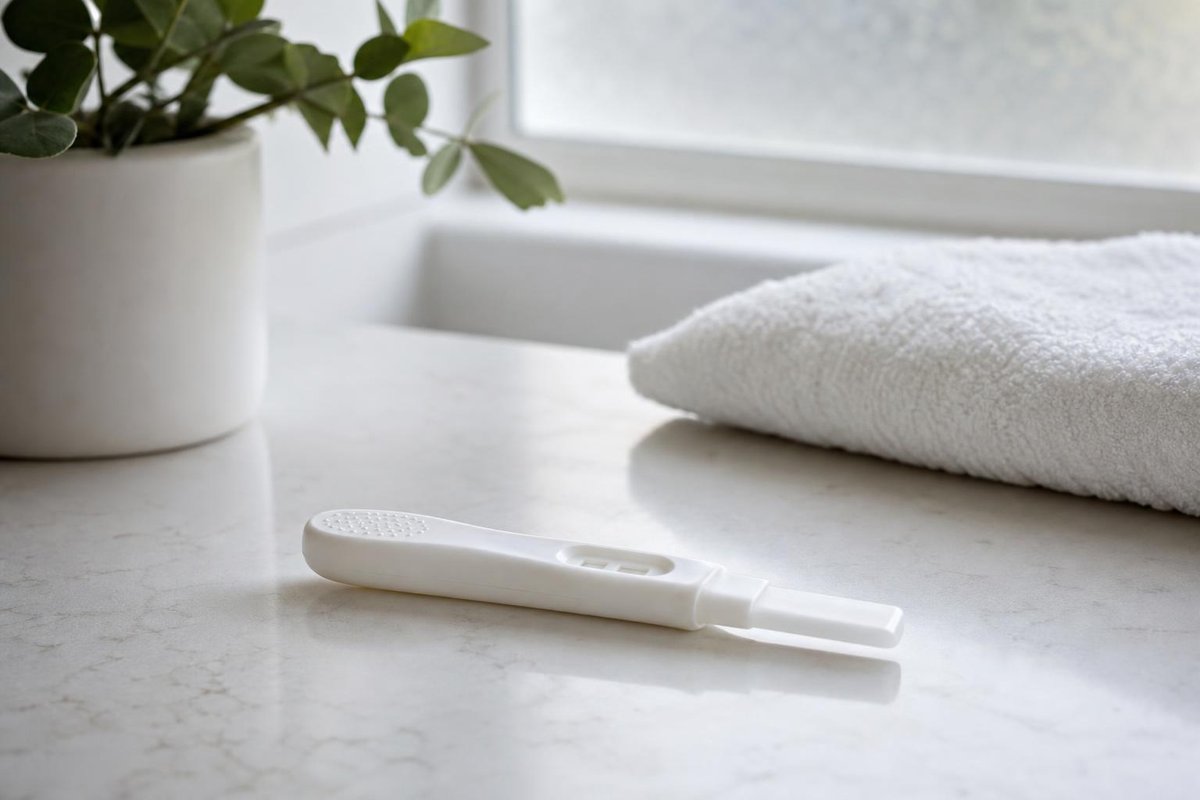
If you don’t know when your next period is due, do the test at least 21 days after you last had unprotected sex.
You can use urine collected at any time of day rather than only first thing in the morning, as long as you follow the instructions for your particular test. Hormones in contraception such as the pill don’t stop a pregnancy test from working, and since no method of contraception is completely effective, take a test if you think you might be pregnant.
Trust a positive more than a negative
A positive home pregnancy test is almost certainly correct, but a negative result is less reliable: it may be wrong if the test was taken too early or the instructions weren’t followed properly, and some medicines can also affect results. The two answers aren’t equally final.
If a test is negative but you still think you’re pregnant, wait a few days and test again, and speak to a GP if the second test is negative but your period still hasn’t arrived. You could be pregnant if you miss a period and have had sex, so if tests keep coming back negative and you have missed 3 periods in a row, see a GP to find out why.
Signs that mean getting help now
The advice comes from the National Health Service (NHS) in the United Kingdom (UK), so the services it names are British.
Pain, with or without a positive test
An ectopic pregnancy, where the fertilised egg implants outside the womb, may cause no symptoms, but those that do appear tend to develop between the 4th and 12th week of pregnancy and can include a missed period and other pregnancy signs together with:
- tummy pain low down on one side
- vaginal bleeding or a brown watery discharge
- pain in the tip of the shoulder
- discomfort when peeing or pooing.
If you might be pregnant:
- contact a GP or NHS 111 right away for a combination of these symptoms, even without a positive pregnancy test
- call 999 or go to accident and emergency (A&E) for sharp, sudden, intense tummy pain together with feeling very dizzy or fainting, feeling sick or looking very pale.
Bleeding once you know you are pregnant
If you’re pregnant and have light vaginal bleeding or spotting with no tummy pain or only mild pain, get urgent medical advice: call your maternity unit, an early pregnancy unit if you’re under 20 weeks, or NHS 111. With severe pain, shoulder pain, fainting or heavy bleeding, call 999.
So the thing to hold on to is simple. Before the day your period is due, tender breasts, tiredness and a little nausea can come from pregnancy, from PMS or from a stressful month, and reading them more closely will not tell them apart. Stop asking your body for an answer it cannot give yet. Pick the date instead: the first day of a missed period, or at least 21 days after unprotected sex if you don’t know when it is due. Take the test then, and trust a positive. If a negative doesn’t fit, test again a few days later, and speak to a GP if your period still hasn’t come. Pain or bleeding is the exception: for those, follow the steps above and get help rather than wait.
Sources
- Better Health Channel (Department of Health, State Government of Victoria). Pregnancy: signs and symptoms: Better Health Channel
- National Health Service (United Kingdom). Doing a pregnancy test: NHS
- National Health Service (United Kingdom). Ectopic pregnancy: NHS
- National Health Service (United Kingdom). Miscarriage: NHS
- National Health Service (United Kingdom). Period problems: NHS
- National Health Service (United Kingdom). Periods: NHS


Download the app and get 7 days free use


