 eng
 rus
 deu
 spa
 fra
 ita
 por
 srp
 tur
 ukr
 por
 bos
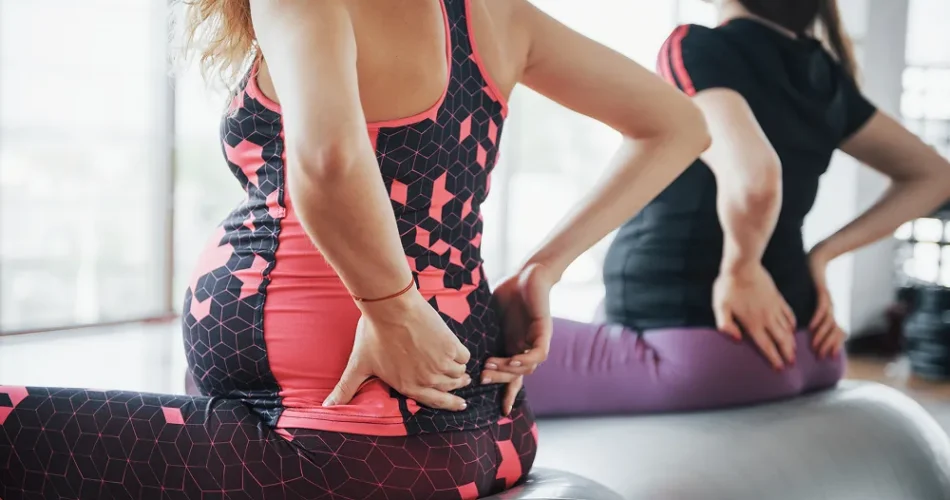
Gentle exercise can help support your back during pregnancy, but pain does not always mean you need a deeper stretch. Start with comfortable movement and seek advice if symptoms are severe, unusual or affecting daily life.
You do not need a completely different exercise programme on the first day of each trimester. Your symptoms, experience and pregnancy care plan matter more than a calendar-based sequence.
Check the symptoms before exercising
NHS advice is to contact your GP or midwife urgently for back pain in the second or third trimester, because it can sometimes be a sign of early labour.
Seek advice promptly if pain comes with fever, vaginal bleeding, pain when passing urine or pain under the ribs. Loss of feeling in the legs, buttocks or genitals requires emergency assessment.
Do not use a relaxation exercise to delay care for those symptoms. Ask what activity is appropriate once the cause has been assessed.
Try a small supported movement when appropriate
The NHS describes a gentle exercise on hands and knees to help the abdominal muscles support the back.
Place your hands below your shoulders and knees below your hips. Gently round your back upwards within a comfortable range, letting your head relax. After a brief pause, return slowly to a neutral back rather than dropping into a deep arch.
Keep the movement unforced and stop if it hurts. If the position is uncomfortable for your wrists or knees, ask a physiotherapist for another option instead of improvising through pain.
Adapt the session to how you feel
If you already exercise, familiar activities may remain suitable with adjustments. If starting something new, begin gently and build up gradually.
NHS pregnancy guidance advises avoiding overheating and long periods lying flat on your back later in pregnancy. Do not add vigorous exercise simply because a particular trimester is described as the ideal time to train.


- Yoga for each trimester
- Breathing during labor
- Meditations and relaxation techniques
- Video lectures on childbirth preparation
- Nutrition program
- Consultations with experts
- Helpful articles and books
- Psychological support
A pregnancy-trained teacher can help with yoga adaptations. Beginner Hatha yoga explains how to choose a suitable setting.
Consider the pelvis as well as the back
Pain when turning in bed, using stairs or standing on one leg can be associated with pelvic girdle pain. Ask your midwife or GP about assessment.
Physiotherapy may include exercises and advice on daily movement. It should respond to your symptoms rather than assume that all pelvic discomfort needs stretching.
Hip-opening yoga raises a separate caution: forcing the knees apart may aggravate some symptoms.
Change the movements you repeat each day
Think about feeding a pet, carrying shopping or getting out of a chair. A manageable change to a repeated task may matter as much as the exercise session.
NHS advice includes bending the knees when lifting, avoiding heavy loads and moving the feet when turning rather than twisting the spine. Support your back when sitting and make room for rest.
If work or caring responsibilities make these changes difficult, explain that at your appointment. Ask for practical alternatives that fit the tasks you actually need to do.
Review progress without chasing flexibility
Notice whether ordinary activities feel easier and whether symptoms settle after movement. You do not need to touch the floor or hold a pose longer to show improvement.
If pain persists or worsens, ask for a review. Back recovery after childbirth concerns a later stage and should not be copied into pregnancy unchanged.
The useful exercise is one that fits your current assessment and helps you move comfortably. It should not depend on pushing past pain to complete a fixed number of repetitions.
Sources
- NHS. Back pain in pregnancy
- NHS. Pelvic pain in pregnancy
- NHS, United Kingdom. Exercise in pregnancy
- Shrewsbury and Telford Hospital NHS Trust. Pelvic health during pregnancy and beyond


Download the app and get 7 days free use


