 eng
 rus
 deu
 spa
 fra
 ita
 por
 srp
 tur
 ukr
 por
 bos
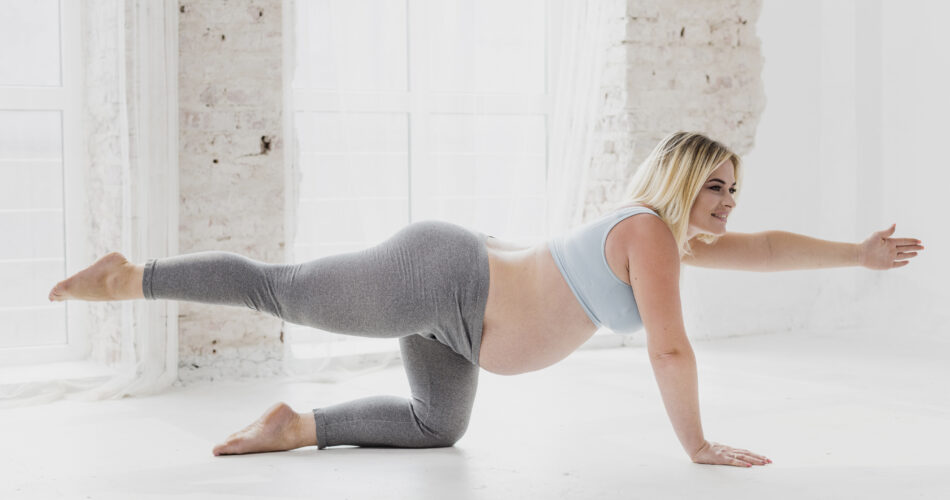
In the third trimester, choose activity you can do comfortably and adapt it as your pregnancy changes. Walking, swimming and suitable pregnancy classes can all be options. You do not need to complete ten particular exercises to prepare for birth.
Your previous activity, symptoms and maternity advice matter more than a generic programme for a numbered week.
Use weekly guidance as a direction
UK guidance recommends aiming for 150 minutes of moderate activity each week during pregnancy, with muscle strengthening included on two days. Moderate activity makes you warmer and breathe faster while you can still talk.
That is a general public health aim, not a target to reach suddenly at 32 weeks if you have been inactive. Start with a manageable amount and build gradually. Some activity is worthwhile even if you cannot reach the weekly total.
The UK Chief Medical Officers also advise listening to your body and adapting. A medical condition or pregnancy complication may change what is suitable.
Choose movement that fits the day
A walk on an even surface can be easier to adjust than a long fixed class. Choose a route that lets you turn back or rest.
Swimming may feel comfortable because the water supports your weight. A pregnancy exercise class in water is another option if available and appropriate for you.
For strengthening, use movements you know or ask a qualified instructor for a pregnancy-specific session. Do not start unfamiliar vigorous activity simply to catch up with a weekly target.
Yoga in the third trimester involves its own adaptations and is a separate choice.
Change positions before they become a struggle
As the bump grows, transitions and balance may become more difficult. Use stable support and avoid activities with a risk of falling or an impact to the abdomen.


- Yoga for each trimester
- Breathing during labor
- Meditations and relaxation techniques
- Video lectures on childbirth preparation
- Nutrition program
- Consultations with experts
- Helpful articles and books
- Psychological support
NHS guidance advises avoiding activity that keeps you flat on your back for more than a few minutes later in pregnancy. Ask for a side-lying, seated or supported alternative rather than continuing until you feel dizzy.
Do not hold your breath during effort. Shrewsbury and Telford Hospital NHS Trust specifically advises avoiding breath-holding activities in pregnancy.
Pelvic floor exercises require both contraction and release; they are not a reason to tense throughout every movement.
Plan for comfort rather than endurance
Keep water available and choose a cool environment. Tell the instructor that you are pregnant and mention any symptoms or restrictions before the session starts.
Stop if you become uncomfortable, too hot or unwell. If pelvic pain affects walking or ordinary tasks, ask your maternity team for advice instead of trying to stretch through it.
A shorter session or a different activity may be more suitable that day. Completing a planned duration is less important than responding to symptoms.
Know when to contact the maternity team
Contact your maternity unit immediately if your baby’s movements decrease, stop or change. Do not wait until the next day or use a home heartbeat device to reassure yourself.
Vaginal bleeding also needs prompt advice; heavy bleeding, severe pain or fainting requires emergency assessment. Stop exercising while seeking help.
Preparing for childbirth includes questions beyond fitness. Exercise can support wellbeing, but it cannot guarantee an uncomplicated birth or replace your maternity care plan.
Sources
- NHS. Vaginal bleeding in pregnancy
- NHS. Your baby's movements
- NHS, United Kingdom. Exercise in pregnancy
- Shrewsbury and Telford Hospital NHS Trust. Pelvic health during pregnancy and beyond
- UK Chief Medical Officers. Physical activity for pregnant women


Download the app and get 7 days free use


