 eng
eng rus
rus deu
deu spa
spa fra
fra ita
ita por
por srp
srp tur
tur ukr
ukr por
por bos
bos
- Why start now, not after the birth
- If your pregnancy has complications
- The mistake that turns a lift into a push
- Why letting go counts
- How to do pelvic floor exercises in pregnancy
- Finding the right muscles
- Ten seconds, done properly
- How often to do them
- The rest of your week
- When to expect a change
- What a pelvic floor physiotherapist adds
- When to get checked by a doctor
- After the birth
- Sources
- Read next
Yes, you can exercise your pelvic floor during pregnancy and after the birth, and the advice is to start before pregnancy and keep going while you are pregnant, so if you have not begun, begin now. Whether it helps depends less on how many squeezes you do than on doing them properly: lifting up rather than bearing down, breathing through each hold, and letting go completely at the end.
Those three details are easy to get wrong without noticing.

Why start now, not after the birth
Training before, during and after pregnancy may help you prevent or reduce pelvic floor problems such as leaking urine once the baby is here.
The evidence on tears is narrower. Across six studies, not all randomised, the women had low-risk pregnancies, one baby lying head-down and a planned vaginal birth. Pelvic floor training before labour, usually daily through the third trimester, was linked with fewer perineal tears, most clearly the severe third- and fourth-degree kind.
If your pregnancy has complications
If you’ve been told your pregnancy is complicated, ask before you start: with medical or obstetric complications, your obstetric care provider should evaluate you carefully before recommending any activity. Without them, exercise in general, not just pelvic floor work, is safe and desirable.

The mistake that turns a lift into a push
Many women push down instead of pulling up when doing Kegel exercises, the usual name for these squeezes. That mistake can make pelvic organ prolapse worse. A pelvic floor physical therapist can use sensors to measure your muscle strength and teach you the correct technique.
Feeling effort won’t tell you the direction. In a survey at antenatal clinics in Ghana, only about a third of pregnant women aware of the exercises knew to keep breathing normally during them (36%), and a similar share understood that their stomach muscles should stay relaxed (32%).
Why letting go counts
If you still feel clenched after a set, or sex has become painful or your vulva hurts, get your technique checked rather than squeezing harder.
Weakness isn’t the only problem. An overactive pelvic floor, one that works too hard, can cause painful sex, vulval pain and reduced bladder control, so fully release the muscles after every squeeze. Relaxing is part of each repetition, not just a pause.
How to do pelvic floor exercises in pregnancy
Finding the right muscles
Sit or lie down and relax your thighs, buttocks and stomach muscles. Squeeze around your back passage as if stopping wind: the muscles around your anus and vagina should lift up inside. Keep breathing normally, with your buttocks relaxed, as you contract, hold and release. Over time, make each hold stronger and longer.
You can also imagine stopping your urine flow midstream, but do not actually do it while you are peeing.
In later pregnancy, lying flat on your back for more than a few minutes can make you feel dizzy and is not good for your baby. Do the exercises sitting or standing instead.
Ten seconds, done properly
Australian state health advice combines long holds with quick squeezes. Keep your stomach relaxed. Lift and squeeze as if stopping urine or wind. Hold firmly for 5 seconds, building to 10, and keep breathing normally rather than holding your breath. Release slowly, rest 5-10 seconds between squeezes, and repeat up to 10 times. Then do 10 quick, short, strong squeezes, letting go fully each time, lying down, sitting or standing.
The National Health Service (NHS) in the United Kingdom (UK) starts lower, using both short and long squeezes. Hold for 2 seconds without pulling your tummy in, relax and repeat 10 times, breathing normally as you gradually build the hold to 10 seconds. Both routines end at a 10-second hold. Start with 2 seconds or 5, whichever you can hold firmly while breathing easily with a soft stomach, and build from there.
How often to do them
While you’re learning, aim for five or six sessions a day. Once you understand how to do the exercises, three a day is enough.
Late-pregnancy trials didn’t identify a best routine. Some used 5-10 daily repeats of a 3-second contraction and 3-second relaxation, while others used twice-daily sessions of 10-15 minutes with 10-15 five-second contractions. Another regimen used four sets of 10 six-second holds followed by quick one-second squeezes.


- Yoga for each trimester
- Breathing during labor
- Meditations and relaxation techniques
- Video lectures on childbirth preparation
- Nutrition program
- Consultations with experts
- Helpful articles and books
- Psychological support
Practise every day, at any time and in any position. Use a familiar cue: waiting for the kettle to boil or sitting at a red light. Squeeze when you cough or sneeze. When you lift something, such as shopping bags or a child, tighten before and during the lift.
The rest of your week
Pelvic floor work belongs alongside ordinary exercise, not in its place. In Scandinavian studies, where usual care already includes physiotherapy and exercise, supervised pregnancy exercise programmes added no benefit for low back and pelvic girdle pain. Outside Scandinavia, they reduced it compared with usual care, whether they used pelvic floor exercises, pelvic stabilising work or cardio. No type did better than another.
In the UK, NHS guidance for pregnant women is the same as for all adults: aim for 150 minutes of moderate-intensity activity a week, including 2 muscle-strengthening sessions. If that isn’t manageable, do what you can. If you would rather not plan that from scratch, MomsLab’s trimester schedule sets out home yoga and Pilates for each stage of pregnancy, needs a mat and room to lie down, and moves on to the next trimester by itself.
When to expect a change
It can take weeks to notice a substantial improvement from pelvic floor training, but things should be changing for the better within 4-5 weeks. If they aren’t, see a pelvic health physiotherapist or your general practitioner (GP) for a technique check. Another doctor or a continence advisor can check too.
For leaks, NHS advice says you may have to keep going for a few months before seeing any benefit. Those are two checkpoints. By the first, something should feel different, while the second allows time for leaking to ease. If nothing has changed at that earlier point, get your technique checked rather than giving up or squeezing harder.
What a pelvic floor physiotherapist adds
Pregnant women interviewed in one small study described conflicting online advice, worries about doing the exercises wrong and a wish to learn from a professional before practising at home. That instinct makes sense.
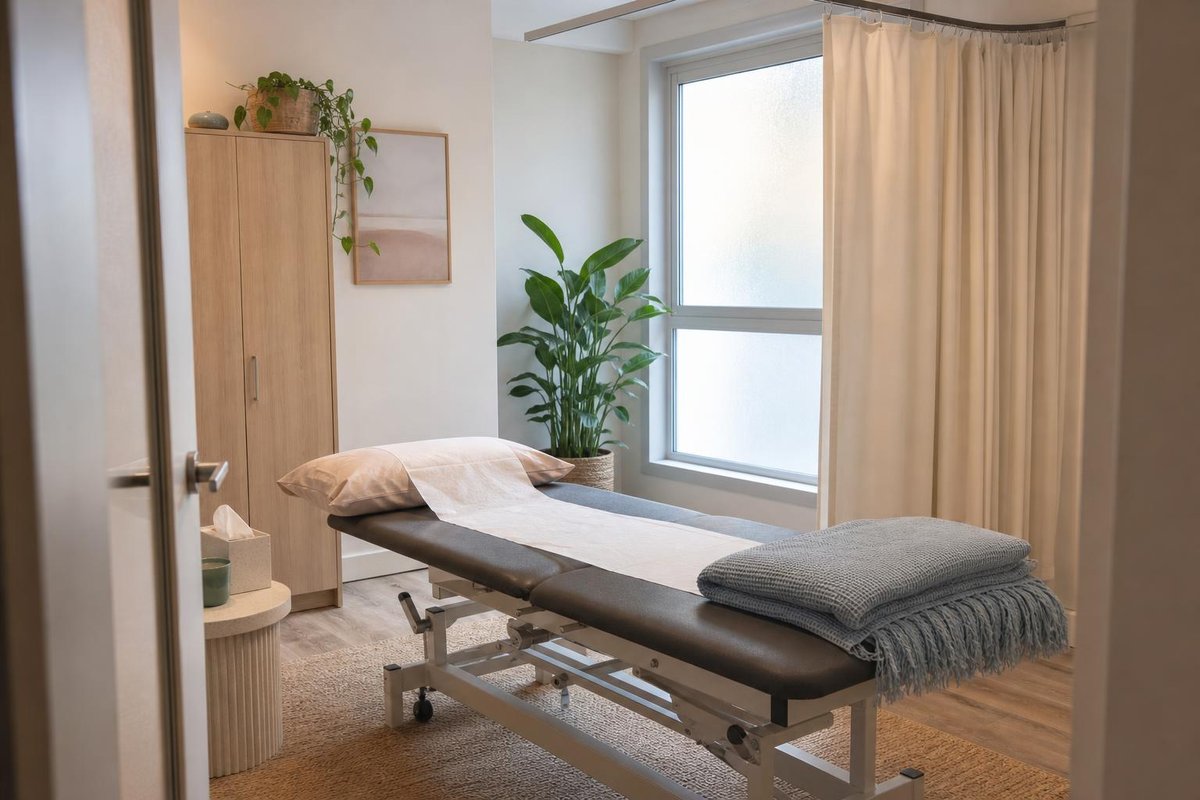
A pelvic floor physiotherapist (physical therapist, in US terms) usually assesses the muscles with a vaginal exam. They ask for your consent first. With a finger, they gently check strength, tightness and coordination as you squeeze. If you find it hard to feel or deliberately contract these muscles, as some women do, see a specialist physiotherapist or continence nurse for advice.
These job titles come from Australian, UK and US health services, so names and routes to care may differ where you live.
If you’re not sure you have all three parts right (lifting, breathing and fully releasing), an hour with someone trained to check is a better investment than another month of counting on your own.
When to get checked by a doctor
If you have bladder or bowel problems, such as needing to pee often, leaking urine, constipation or trouble controlling your bowels, see your doctor for an assessment. They may refer you to a physiotherapist or continence nurse.
See a GP if you have a lump in or around your vagina or any of these other possible prolapse symptoms, which the NHS lists as non-urgent:
- heaviness or pressure in your lower tummy or vagina
- a bulge you can feel or see
- pain during sex
- problems pooing
- leaking a little urine when you cough, sneeze or exercise.
In the UK, treatment options for prolapse symptoms that affect daily life include physiotherapy and pelvic floor muscle training, usually with a specialist women’s health physiotherapist. Book an appointment rather than waiting for the exercises to sort them out.
After the birth
From 48 hours after the birth, you may be able to restart gentle pelvic floor exercises, even if you’ve had perineal trauma. Check with your doctor or midwife about your own situation.
Electrical stimulation and biofeedback are one option for later, though researchers urge caution about starting intravaginal stimulation early. In trials of new mothers, all run in China, adding them to pelvic floor training cut the risk of stress urinary incontinence over the first postpartum year to roughly a third of the risk with training alone (risk ratio, RR 0.36).
Recovery may take longer after a large baby, a long pushing stage, or a forceps or vacuum delivery, but pelvic floor muscle function often recovers within the first year. Regular exercises with the right advice can help.
Sources
- American College of Obstetricians and Gynecologists. value is what Coveo indexes and uses as the title in Search Results.–> <title>5 Things I Wish All Women Knew About Pelvic Organ Prolapse : ACOG
- American College of Obstetricians and Gynecologists. value is what Coveo indexes and uses as the title in Search Results.–> <title>Physical Activity and Exercise During Pregnancy and the Postpartum Period : ACOG
- Better Health Channel (Department of Health, State Government of Victoria). Pelvic floor : Better Health Channel
- Cureus. Active Interventions for the Prevention and Treatment of Pregnancy-Related Lumbopelvic Pain: A Systematic Review and Meta-Analysis
- Frontiers in physiology. Electrical stimulation and biofeedback combined with pelvic floor muscle training for pelvic floor dysfunction in postpartum women: a systematic review and meta-analysis
- Healthdirect Australia. Pelvic floor exercises : healthdirect
- National Health Service (United Kingdom). Exercise in pregnancy – NHS
- National Health Service (United Kingdom). How to help a weak bladder – NHS
- National Health Service (United Kingdom). Pelvic organ prolapse – NHS
- Patient preference and adherence. Perceptions and Experiences of Barriers to Pelvic Floor Muscle Training Among Pregnant Women: A Descriptive Phenomenological Study
- PloS one. Pelvic floor exercise: Awareness, knowledge, beliefs and practices among pregnant women in a Ghanaian setting
- Tzu chi medical journal. The role of prelabor pelvic floor muscle training in reducing perineal tear incidence during vaginal delivery: A systematic review and meta-analysis


Download the app and get 7 days free use


