 eng
eng rus
rus deu
deu spa
spa fra
fra ita
ita por
por srp
srp tur
tur ukr
ukr por
por bos
bos
- What does “toning the body” mean and what are realistic timeframes
- What timelines are reasonable
- Quick Start Without Mistakes: The First Week
- Simple rules for 7 days
- Workouts for Tone: What Really Works and How to Create a Plan
- How to schedule workouts over the week
- Nutrition for Tone without Strict Diets
- Simple habits that save time and make an impact
- Recovery: sleep, stress, and daily activity
- A simple and doable plan for two weeks
- Conclusion
- Read next
In two weeks, you can noticeably improve your well-being, tone your muscles, and reduce swelling if you act regularly and safely. In this article, you’ll receive a simple and clear action plan – for workouts, nutrition, and recovery – that is suitable for women of all ages, including young mothers and those preparing for pregnancy.
What does “toning the body” mean and what are realistic timeframes
Tone is not just about appearance or a number on the scale. This word usually means a combination of three things: firm muscles, good posture, and stable well-being throughout the day. When your body is toned, you tire less, move more easily, and feel more energetic without stimulants and overloading.
It is important to distinguish between two tasks. The first one is to improve the condition of the body: reduce swelling, add strength to muscles, straighten the back, and regulate breathing. The second is to maintain health and a normal lifestyle without pushing yourself with diets and excessive workouts. It is balance that makes tone sustainable, not temporary.
What timelines are reasonable
Changes occur gradually, and that’s normal. If you act regularly, the first signs can be seen quite quickly—usually within 7–14 days. This is often felt as lightness in the body, less swelling, and improved sleep quality.
More noticeable external changes appear later. According to research and practice of fitness specialists, most women require 3-6 weeks to see stable shifts in the mirror and clothing fit. Full result consolidation takes 8-12 weeks – this time is needed for muscles to adapt to loads and for habits to become part of daily life.
If you are a young mother or preparing for pregnancy, these timelines might be slightly longer – this is not a problem but a sign of a gentle approach to the body.
Quick Start Without Mistakes: The First Week
The first week is not for records, but to incorporate movement into the usual day without stress and breakdowns. The most common mistake is starting too harshly, getting tired, and quitting everything after a few days. It is much more effective to act moderately but consistently.
A minimal start suitable for most women:
- 20–40 minutes of walking daily. You can go with a stroller, in the park, or simply walk briskly.
- 10–15 minutes of light exercises at home. Gentle warm-up, posture work, breathing, a few basic core movements. In our postpartum recovery course, the daily workouts are designed to be just this length so that young mothers can easily fit them into their schedule.
- Regular time for movement. It’s best to do it every day at the same time – this helps the habit form more quickly.
If you have recently given birth, feel back or pelvic pain, or have diastasis, it’s worth taking it even easier. In this case, being careful is more important than speed.
Simple rules for 7 days
To avoid overload at the start, it’s useful to follow a few understandable rules. They are suitable for most people and help the body adapt to physical activities.
- Do not exercise to exhaustion. Light fatigue is fine; complete exhaustion is not.
- Alternate between movement and rest. Active day – calm evening.
- Listen to your body. If you experience sharp pains or dizziness, reduce the load.
- Record a minimum of activities each day. Even a short walk is better than doing nothing.
In just 7 days, you will likely notice that moving becomes easier and your well-being more stable throughout the day.
Workouts for Tone: What Really Works and How to Create a Plan
Strength exercises play a decisive role in making the body more toned. They are the ones that strengthen muscles, improve posture, and change the feel of body firmness – even if weight changes slowly.
The most effective combination looks like this:
- Exercises for legs and buttocks. Squats, lunges, step-ups – they engage large muscles and provide a noticeable effect.
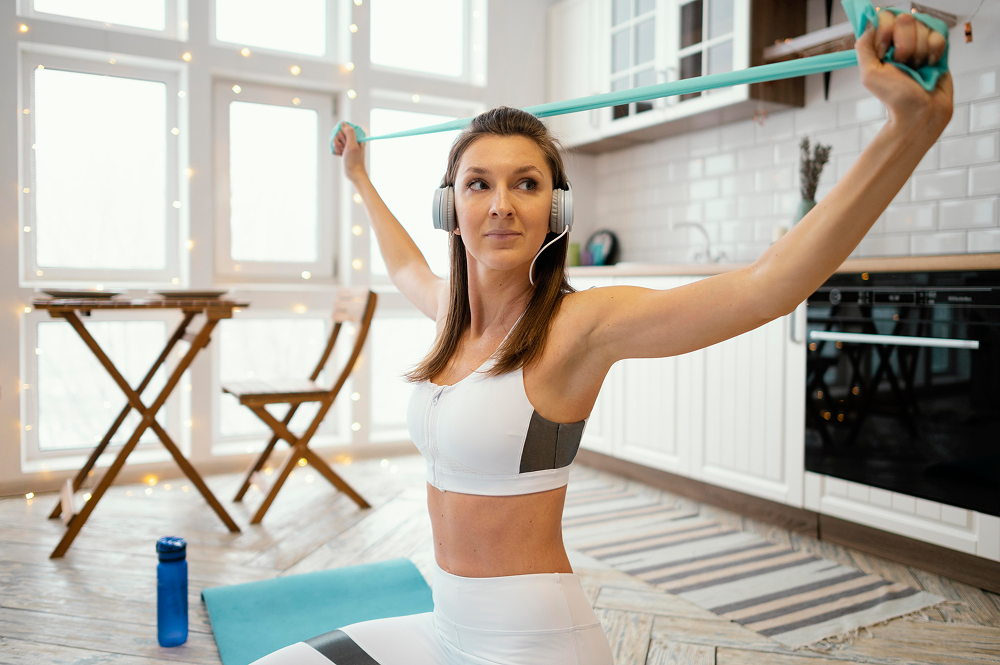
- Exercises for arms and back. Wall or bench push-ups, band pulls, pull-ups in simplified versions.
- Core exercises. Gentle plank variations, breathing techniques, and pelvic floor work.
Quality over quantity is important. It’s better to do fewer repetitions with proper technique than many with poor form.
How to schedule workouts over the week
It’s optimal to alternate strength training with moderate activity throughout the day. This helps muscles recover and reduces the risk of overload.


- Personalized meal plan
- Calorie calculator
- Goal-oriented menu (reduction/maintenance)
- Recipes and shopping list
- Online yoga and workouts
- Meditations and mindful eating
- Nutritionist and trainer support
- Chat consultations
A simple weekly plan example (or use the ready postpartum recovery course on Momslab – all workouts are already scheduled and recorded, you just need to play and repeat):
- Monday – strength exercises (legs and core) 25–35 minutes.
- Tuesday – brisk walking 30–40 minutes + 10 minutes gentle stretching.
- Wednesday – strength exercises (arms and back) 20–30 minutes.
- Thursday – active walk or cycling 30 minutes.
- Friday – strength exercises (full body) 25–35 minutes.
- Saturday – long walk at a comfortable pace.
- Sunday – recovery: breathing, light mobility, rest.
If you have less time, you can reduce each workout to 15-20 minutes, but try to do them regularly. Over time, your muscles will become stronger, and you will be able to add more repetitions or more complex movements.

Nutrition for Tone without Strict Diets
The way you eat directly reflects on your body’s functioning, energy levels, and appearance. For tone, it’s more important to have steady nutrition that supports muscles, reduces swelling, and helps you feel good throughout the day, rather than rapid weight loss.
Instead of strict rules, it’s more beneficial to follow three simple guidelines. First, include protein in every meal – it helps preserve muscles and makes appetite more stable. Second, incorporate vegetables and fiber daily: they improve digestion and increase meal volume without extra calories. Third, drink water regularly throughout the day so that your body functions more evenly and retains less fluid.
Severe restrictions, strict diets, and fasting often lead to the opposite effect: a drop in energy, worsening mood, and rapid return of previous weight after the restrictions end.
Simple habits that save time and make an impact
Instead of complicated calculations, it is more convenient to adopt a few sustainable habits – they are easy to follow even with a busy schedule and housework.
- Protein breakfast. Eggs, cottage cheese, yogurt, fish, or legumes help maintain a steady appetite throughout the day.
- Vegetables at least twice a day. Add them to lunch and dinner – raw or cooked.
- Distribute carbohydrates wisely. Grains, potatoes, fruits are best consumed in the first half of the day or after physical activity.
- Sweets – after the main meal. This way, they have less impact on well-being and cravings for snacks.
This approach supports health and gradually makes the body more toned without constant self-struggle.
Recovery: sleep, stress, and daily activity
Even good workouts are less effective if your body is constantly tired. Lack of sleep increases hunger, raises stress, and slows muscle recovery after work – leading to swelling and decreased energy.
Three basic things are important for maintaining tone: a little more sleep (at least +30 minutes), short breaks for breathing or a peaceful walk during the day, and regular movement – steps, stairs, and home activities.
A simple and doable plan for two weeks
If you compile everything said into a clear algorithm, the first 14 days may look like this:
- Movement every day. 20–40 minutes of walking or other comfortable activity.
- Strength training 3 times a week. Alternate workouts for legs, arms, and core.
- Protein in every meal and vegetables at least twice a day. Drink water regularly.
- 10 minutes of recovery daily. Breathing, gentle mobility, or stretching.
- Sleep is a priority. Add at least 30 minutes to your usual routine if possible.
After two weeks, you will likely feel that your body has become more toned: less swelling, more energy, easier movements, and a more stable state throughout the day.
After work or training, 5–10 minutes of calm breathing and gentle movement is beneficial. In the evening – a warm shower, light stretching, and minimal bright screens an hour before bed.
If fatigue increases, sleep worsens, or pain intensifies, it’s necessary to temporarily reduce the workload and make the next day more restful.
Conclusion
To ensure the results don’t disappear, you don’t need to complicate things drastically. It’s enough to reinforce 2-3 habits and have a “plan B” for busy days. If you couldn’t work out fully, at least do 10–15 minutes of movement. If you couldn’t prepare the perfect meal – add protein and vegetables to what is already available.
It’s important to track simple indicators: how you feel, quality of sleep, strength in basic exercises, and how clothes fit. These benchmarks are more reliable than just the numbers on the scale.
The main idea is simple: you can tone your body quickly if you act regularly, gently, and without extremes. Gradual changes in movement, nutrition, and recovery make the results sustainable and integrate them into everyday life.


Download the app and get 7 days free use


