 eng
eng rus
rus deu
deu spa
spa fra
fra ita
ita por
por srp
srp tur
tur ukr
ukr por
por bos
bos
- First days and weeks: a physiological “storm”
- Abdomen after pregnancy and childbirth: anatomy of changes
- Skin Condition and Stretch Marks
- Diastasis Recti: Diagnosis and Management
- Weight and swelling: why the kilograms don’t go away immediately
- Edema Syndrome
- Breast Metamorphosis: Lactation and Shape
- Intimate Health and Pelvic Floor
- Aesthetic Changes: Skin, Hair, Veins
- Hair
- Veins and Legs
- Posture
- Strategy “from the inside and outside”: nutrition and home care
- Recovery Calendar: When You Can Start Exercising
- Nuances of Nutrition
- Alarming Symptoms: When You Need a Doctor
- Conclusion
- Answers to Frequently Asked Questions (FAQ)
- Read next
The birth of a child is not only the arrival of a new life but also the beginning of a significant transformation in the mother’s body. Many mothers experience mixed feelings in the first days when they look in the mirror: the joy of motherhood coexists with surprise or disappointment at their reflection. The belly does not disappear instantly, hips may appear wider, and the skin loses its tone.
To understand how the body changes after childbirth, it is important to know the physiological basis of these processes. This will help avoid unnecessary stress, build realistic expectations, and plan a competent recovery strategy.
In this article, we will thoroughly examine what is considered normal, what requires the attention of specialists, and answer the main questions about regaining shape.
First days and weeks: a physiological “storm”
Immediately after childbirth, a woman’s body initiates a complex mechanism of involution — the regression of organs and systems to their ‘pre-pregnancy’ state. This does not happen overnight.
The woman’s uterus, which increased in size many times over during pregnancy and weighed about a kilogram, begins to contract intensively. This process is accompanied by cramp-like sensations, especially during breastfeeding, as oxytocin stimulates the muscles.
Important! In the first 6–8 weeks after childbirth, lochia are discharged from the genital tract. This is a wound secretion indicating the cleansing of the uterine cavity. During this period, thermal procedures (sauna, hot bath) and active physical exercises are strictly prohibited.
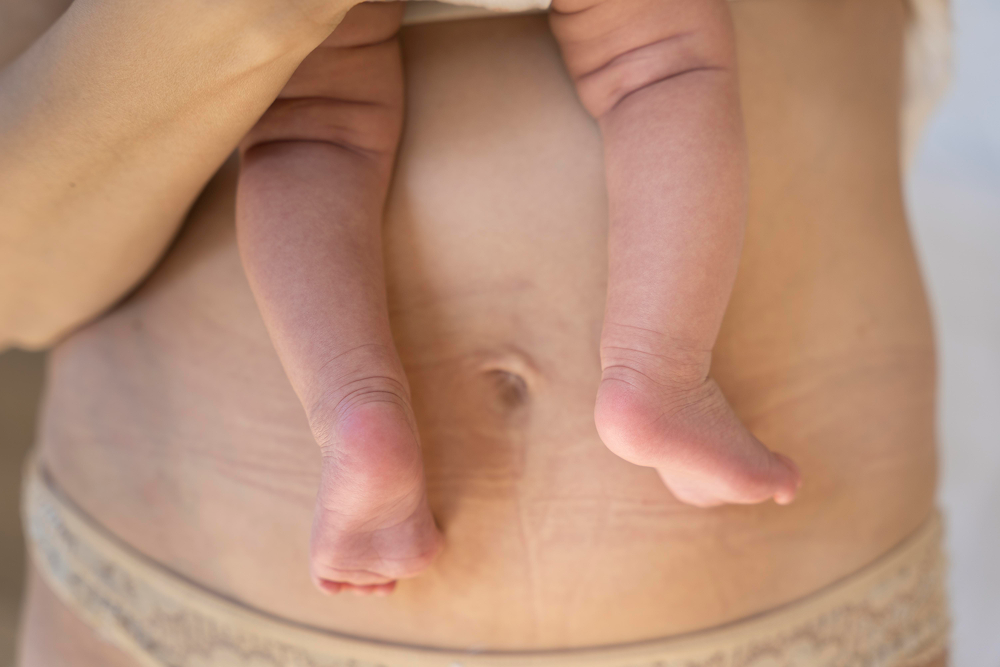
In the first day, a woman’s abdomen looks as if she is still 5-6 months pregnant. This is normal: muscles and skin need time to contract, and internal organs need to return to their usual places.
Abdomen after pregnancy and childbirth: anatomy of changes
The most common search query is ‘how to reduce the belly after childbirth.’ To address a woman’s concern, it is essential to understand what contributes to the abdominal volume in the postpartum period.
The visual increase in the abdomen is influenced by three factors:
- Enlarged uterus. It gradually contracts. By the end of the second week, it hides behind the pubic bone, and the abdomen becomes significantly smaller.
- Subcutaneous fat. The hormonal background during pregnancy promotes fat accumulation on the abdomen and thighs — this is an energy reserve for future lactation.
- Stretched muscles and skin. The anterior abdominal wall has been under immense pressure for 9 months, and effort is required to restore its tone.
Skin Condition and Stretch Marks
The skin on the abdomen may appear loose, wrinkled, and darkened (Linea nigra). Stretch marks (striae) are microtears in the dermis that fade over time, turning from crimson to silvery. Completely removing old striae is difficult, but modern cosmetic methods (laser, resurfacing) significantly improve the skin’s appearance.
Diastasis Recti: Diagnosis and Management
One of the main reasons the abdomen remains protruding after childbirth even while losing weight is diastasis. It is the separation of the rectus abdominis muscles along the linea alba (tendon center).
Under the influence of the hormone relaxin, connective tissue softens to make room for the growing fetus. After the baby is born, the muscles are supposed to come back together, but this doesn’t happen for everyone.
How to check for diastasis at home:
- Lie on your back, bend your knees, feet flat on the floor.
- Lift your head and shoulders as if doing a crunch.
- Place your fingers perpendicular to your navel.
- Feel the distance between the firm ridges of muscles.
If your fingers sink in deeply and the distance exceeds 2-3 cm, it indicates diastasis. In this case, traditional abdominal exercises (crunches, planks) can be dangerous and may worsen the problem.
Weight and swelling: why the kilograms don’t go away immediately
Immediately after childbirth, a woman loses about 5-7 kg (weight of the baby, placenta, amniotic fluid). However, the remaining excess weight may linger.
The hormone prolactin, responsible for milk production, affects metabolic recovery. It can lead to fluid retention and increased appetite.
Edema Syndrome
In the first days after birth, many notice significant swelling in the legs and face. This is due to the redistribution of fluid in the body and the expulsion of water accumulated during pregnancy. Usually, the excess fluid completely disappears within a few days, but sometimes slight swelling persists for up to two weeks.
Breast Metamorphosis: Lactation and Shape
A woman’s breasts begin preparing for feeding during pregnancy. With the arrival of milk (on the 3rd-5th day), the mammary glands significantly increase in size, becoming firm and sensitive.
How the breasts change:
- Volume. Can increase by 1–3 sizes.
- Shape. After lactation ends, glandular tissue is replaced by fat, often leading to ptosis (sagging).
- Nipples. They may change color and size, becoming more sensitive.
To maintain shape, it is extremely important to wear supportive (but not compressive) undergarments around the clock while you continue breastfeeding, and also to ensure proper latching technique for your baby.
Intimate Health and Pelvic Floor
A topic often kept silent — the condition of the pelvic floor muscles. A child’s passage through the birth canal is a huge strain. Even with a cesarean section, the pelvic floor muscles endure pressure from the weight of the uterus during pregnancy.
Possible issues:
- Stress urinary incontinence (when sneezing, coughing).
- Reduced sensitivity during intimacy.
- Prolapse of the vaginal walls.
Restoring the muscles of the perineum is a top priority. After consulting a gynecologist, you can start performing pelvic floor exercises. This will help restore tone and prevent gynecological diseases in the future.
Aesthetic Changes: Skin, Hair, Veins
The mother’s body expends enormous resources on building the child’s body, which affects her appearance.
Hair
Approximately three months postpartum, active hair loss begins. This is a physiological norm. During pregnancy, estrogen levels prolonged the hair growth phase, and with the sharp drop in hormone levels, all the “delayed” hairs start falling out simultaneously. The process stabilizes within 6–12 months.
Veins and Legs
Stress on the legs and changes in blood composition can trigger varicose veins. If spider veins appear during pregnancy, it’s worth visiting a phlebologist.
Posture
The shift in the center of gravity during pregnancy leads to changes in the curves of the spine. Hyperlordosis (lower back curvature) often persists, causing the abdomen to protrude forward, even if there is no fat layer.


- Personalized meal plan
- Calorie calculator
- Goal-oriented menu (reduction/maintenance)
- Recipes and shopping list
- Online yoga and workouts
- Meditations and mindful eating
- Nutritionist and trainer support
- Chat consultations
Strategy “from the inside and outside”: nutrition and home care
Aside from physical activity, 70% of the speed of getting back in shape depends on whether the body has the resources for “building” new tissues. The skin on the abdomen won’t become firm if the diet lacks protein, and swelling won’t subside without proper lymphatic drainage.
Nutritional base of recovery:
- Protein is the main building material. Collagen and elastin, which are responsible for skin elasticity, are proteins. If you don’t consume enough (at least 1.2–1.5g of protein per 1 kg of body weight), the body will start breaking down its own muscles, and body tone will remain loose. Include eggs, fish, poultry, or cottage cheese in every meal.
- Bone broths. These are a natural source of easily absorbable collagen and amino acids. A cup of warm bone broth a day can help strengthen joints and improve skin turgor faster than synthetic supplements.
- Vitamin C and iron. Without vitamin C, collagen synthesis is impossible in principle. Add bell peppers, kiwi, greens, or sauerkraut to your meat.
- Fats for hormones. Excluding fats is the main mistake. Omega-3 and the right vegetable oils (olive, flaxseed) are necessary for restoring hormonal balance and tissue elasticity.
Home techniques for skin tightening: While active sports are prohibited, you can work on the quality of your skin locally. These methods enhance blood circulation, triggering cell regeneration.
- Dry brushing. Use a brush with natural bristles. Massage dry body before showering with upward movements—from feet to heart. The abdomen should be massaged strictly clockwise. This is a powerful lymphatic drainage that removes fluid retention and visually smoothes cellulite.
- Contrast shower. Alternating warm and cool water trains the vessels. Start with a comfortable temperature difference, gradually increasing the “degree”. This restores tone to flabby skin on the abdomen and chest.
- Moisturizing. After showering, apply natural oils (coconut, almond, cocoa butter) or creams with urea on damp skin. It is critically important for stretched skin to be nourished to contract without the formation of deep creases.
Remember cortisol. Chronic sleep deprivation raises the level of the stress hormone cortisol. It blocks fat burning and contributes to the accumulation of visceral fat specifically around the waist (the so-called “cortisol belly”). Therefore, the rule “baby sleeps – mom sleeps” is not just a rest advice, it’s a tool for your slimness.
Recovery Calendar: When You Can Start Exercising
Many mothers are concerned about the question: how soon can you start exercising? The main rule is gradual progression. Engaging in physical activity too early can lead to bleeding and prolapse of organs.
Table of approximate timelines for resuming activities (in the absence of complications):
| Period (time after childbirth) | Permitted activity | Prohibited activity |
| First 24 hours | Breathing exercises, light foot movements, turning in bed. | Any physical exertion and lifting weights over 3 kg. |
| 1–2 weeks | Walking around the house, light walks, pelvic floor exercises (lying down). | Vacuum, active core, running, jumping. |
| 6–8 weeks | Beginner Pilates, yoga (without inverted poses), swimming, brisk walking. | Lifting heavy weights, high-intensity interval training. |
| 3–4 months | Full cardio workouts, bodyweight exercises, light strength training. | Impact activities (jumping), if there is pelvic floor weakness. |
| 6 months + | Returning to the regular pre-pregnancy workout routine, running. | Ignoring body signals of pain or discomfort. |
Important! If the birth was via cesarean section, recovery takes longer. The uterine scar must fully form. You can start abdominal exercises no earlier than 4–6 months. Before this, an ultrasound check of the scar’s condition is necessary.

Nuances of Nutrition
Strict diets during breastfeeding are prohibited. The body needs nutrients for milk production and recovery. Caloric deficit should be mild. The main focus is on the quality of products: protein, complex carbohydrates, fiber.
Alarming Symptoms: When You Need a Doctor
The recovery process is individual, but there are signals that should not be ignored. Do not self-medicate if you notice the following signs:
- Sudden heavy bleeding after lochia has already become scarce.
- Fever, chills.
- Pain, redness, or hardening in the breast area (signs of milk stasis or mastitis).
- Sharp pain in the lower abdomen or in the area of the suture.
- Unpleasant odor of discharge.
- Signs of postpartum depression (apathy, aggression towards the child, suicidal thoughts).
The doctor should examine the woman 6–8 weeks after childbirth. During this appointment, the condition of the cervix, stitches is assessed, a smear is taken, and contraceptive methods are discussed.
Conclusion
The way a woman’s body changes after childbirth is a natural reflection of the immense work done by the female body. Recovery requires patience, self-love, and a sensible approach.
It is possible to return to your previous shape, but don’t chase after images on social media where models show off a perfect abs a week after discharge. It took your body 9 months to grow a new life, and it takes at least as much time to recover.
A healthy lifestyle, balanced nutrition, moderate physical activity, and timely consultation with specialists will help you achieve your dream figure without harming your health. Remember, your physical and emotional state directly affects your baby’s well-being.
Answers to Frequently Asked Questions (FAQ)
When will the belly go away?
The visible reduction of the uterus occurs in 2 weeks. Full recovery of the muscular corset and burning of fat layers takes from 6 to 12 months with proper nutrition and activity.
How to distinguish excess skin from fat on the belly?
To choose the right recovery strategy, you need to understand what you’re dealing with. Conduct a ‘pinch test’: grasp a fold of skin on your stomach with your fingers. If the fold is thin (like the back of your hand) and easily folds into wrinkles, it’s loose skin. It requires not diets, but protein-rich nutrition, collagen, massages, and cosmetic procedures (RF-lifting, wraps). If the fold is dense, voluminous, and firm, it’s subcutaneous fat. In this case, the basis of success will be a calorie deficit and cardio exercises. Often, women after childbirth have a combined problem.
Can I wear a bandage?
Doctors recommend wearing a postpartum bandage in the first few days, especially after a cesarean section, to ease back strain and reduce pain. However, you shouldn’t wear it around the clock — muscles need to learn to work on their own.
Why is my weight stable even though I eat little?
The postpartum period is like a hormonal “swing.” Chronic lack of sleep raises cortisol levels (the stress hormone), which contributes to water retention and fat accumulation, particularly in the abdominal area. Additionally, a deficiency in vitamin D, iron (anemia), or thyroid dysfunction (postpartum thyroiditis) can slow metabolism. If weight isn’t decreasing despite adequate nutrition and activity, don’t reduce your diet further — it’s dangerous during lactation. Get tested for ferritin, TSH, and vitamin D. Often, addressing internal deficiencies kick-starts weight loss more effectively than strict diets.
Does breastfeeding affect weight loss after childbirth?
Milk production burns about 500 kcal per day. This helps with weight loss, but only if the woman is not overeating, justifying it as the need to “eat for two.”
Is it possible to completely get rid of stretch marks (striae)?
Stretch marks are essentially atrophic scars that occur due to the rupture of dermal fibers during sudden stretching. It is impossible to completely “erase” them with creams at home, especially if they have already turned white. Cosmetics can only moisturize the skin and make them less noticeable. Real results are provided by instrumental methods: laser resurfacing or fractional photothermolysis, which trigger the synthesis of new collagen. Fresh (red or purple) striae are much more treatable, so it is worth seeing a cosmetologist immediately after breastfeeding is completed, without waiting for the scars to become old.
What to do with the “bulge” above the incision after a cesarean section?
The overhang of tissue above a scar is a common issue that is not always related to excess fat. Often, it is the skin overhang or swelling caused by the dense scar disrupting normal lymphatic drainage in that area. If the “apron” consists of a skin fold, it’s hard to remove with just exercises since you can’t “tone” skin. In the first six months, scar massage (strictly with the doctor’s permission) is effective for softening it and restoring tissue mobility. However, if after a year the fold remains significant, a mini-abdominoplasty — excision of the excess skin and old scar — becomes a radical solution.


Download the app and get 7 days free use


