 eng
 rus
 deu
 spa
 fra
 ita
 por
 srp
 tur
 ukr
 por
 bos
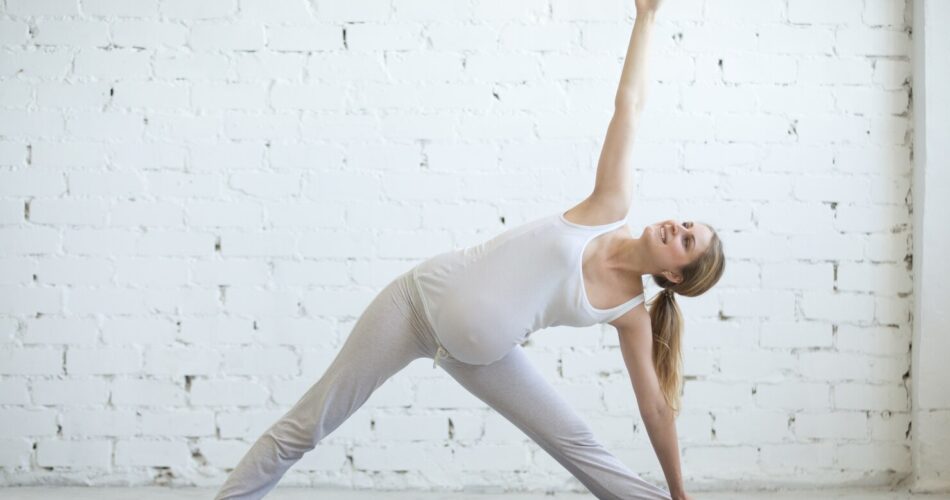
Yoga twists need adapting during pregnancy, especially when a position presses into the abdomen or feels uncomfortable. Do not aim for a particular angle or copy a deep twist from a general class. Tell the instructor you are pregnant and ask for an alternative that suits your current symptoms and any advice from your maternity team.
A pose name does not describe the whole movement
A seated, standing or lying twist can involve different amounts of rotation, support and pressure on the abdomen. Calling a pose gentle does not establish whether its particular version is suitable for you.
For twist-specific advice, Mayo Clinic in the United States recommends avoiding positions that put pressure on the abdomen. It describes adapting rotation to the upper back, shoulders and rib cage. That is not a reason to force a larger turn: ask a teacher trained in prenatal yoga to show an appropriate option or leave the twist out.
If you are new to yoga, choosing a pregnancy class for beginners is more useful than trying to reproduce an advanced pose from a photograph.
Lying twists need attention to position as well
A supine twist is performed while lying on your back. In later pregnancy, avoid spending prolonged periods flat on your back during exercise. Change position if you become dizzy or uncomfortable, and ask the instructor for another way to take part.


- Pelvic floor
- Flat stomach
- Healthy back
- Posture and tone
- Yoga and Pilates
- Personalized menu
- Macronutrients and eating habits
- Meditations and podcasts
Do not use a longer hold as a test of progress. The broader principles of prenatal yoga include comfortable breathing, adaptations and rest. None requires you to complete every position in a sequence.
Ask for a modification before the class reaches the pose
Tell the teacher about pain, previous injuries and restrictions from your clinician. Describe the movement that bothers you rather than just saying that your back feels tight. You can ask:
- Can we replace this twist with a different movement?
- Can I use support or change the starting position?
- What should I do if the same discomfort returns?
For persistent back or pelvic pain, seek assessment rather than relying on repeated twisting. Back exercises during pregnancy address a different question from choosing a yoga pose.
Stop when symptoms appear
Stop a movement that causes pain or makes you feel unwell. Vaginal bleeding, leaking fluid, regular painful contractions, dizziness, chest pain or difficulty catching your breath require prompt medical advice. A change in your baby’s usual movements needs immediate contact with maternity services.
You do not need to prove flexibility or tolerate pressure to benefit from an adapted class. A different movement or rest can be the appropriate choice that day.
Sources
- Mayo Clinic, United States. Women's Wellness: What you need to know about prenatal yoga
- NHS, United Kingdom. Exercise in pregnancy
- Tommy's. When to stop exercising in pregnancy


Download the app and get 7 days free use


